
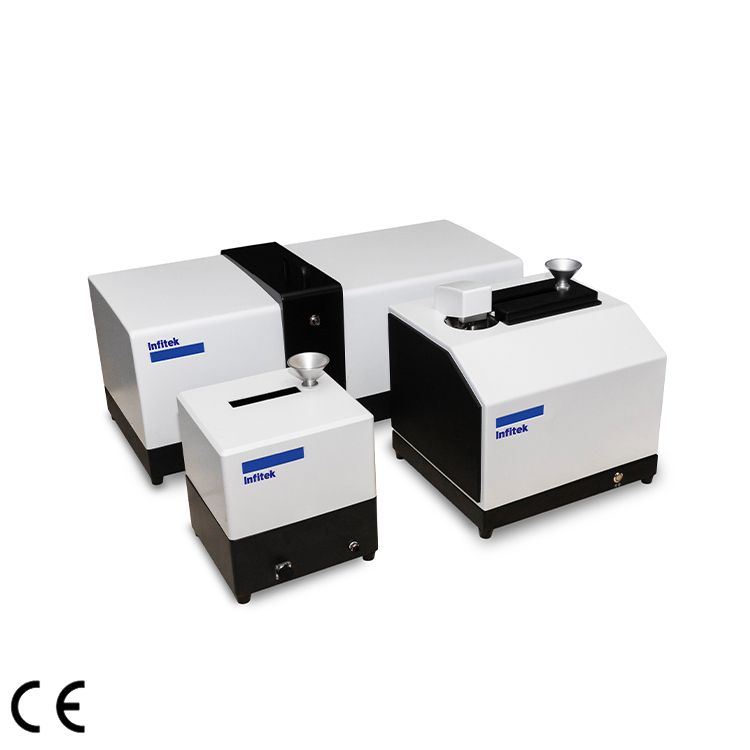
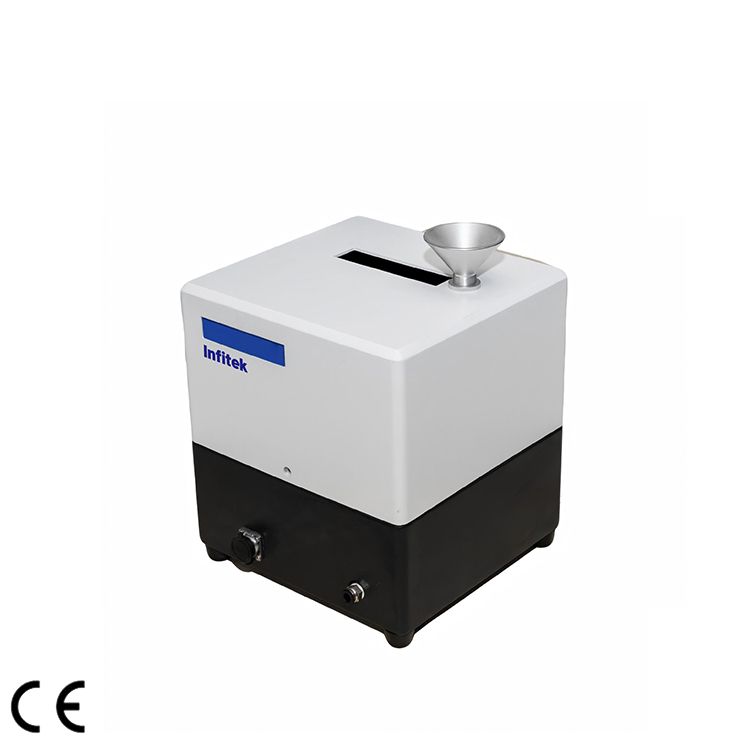
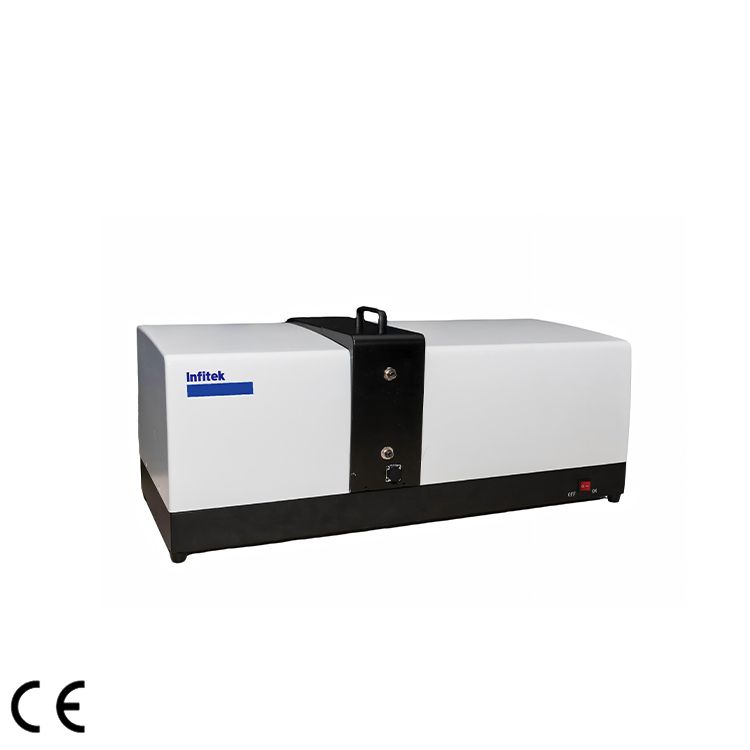
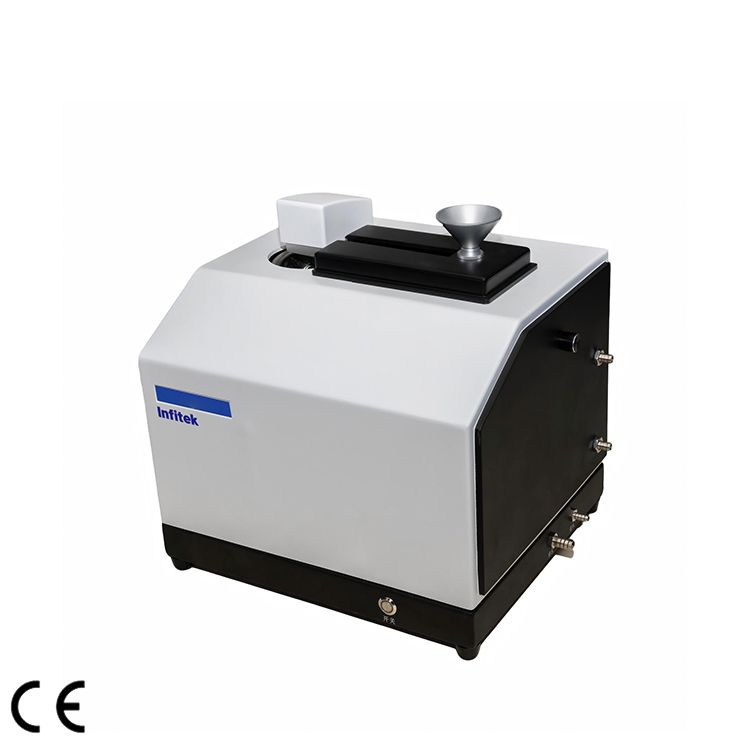
- Unique Separated Modules for Wet and Dry Dispersion
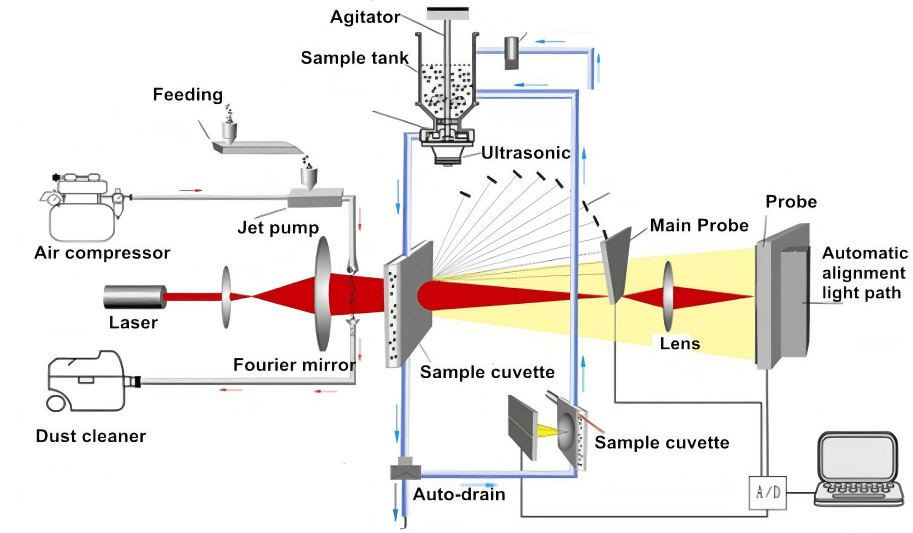
- Convergent-light Fourier transform optical path technology
- Automatic Optical Path Alignment System
- Automatic Sample Dispersion System
- Audit trail is optional to comply with 21 CFR Part 11
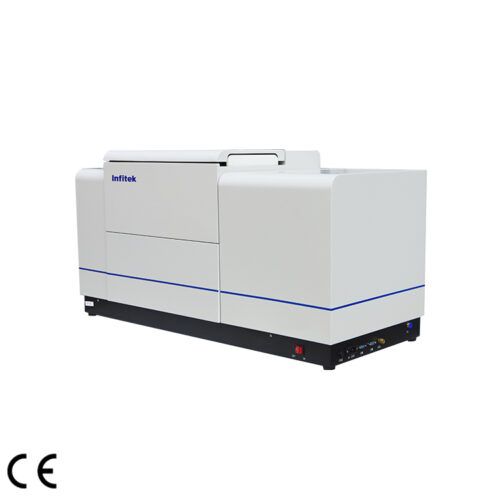
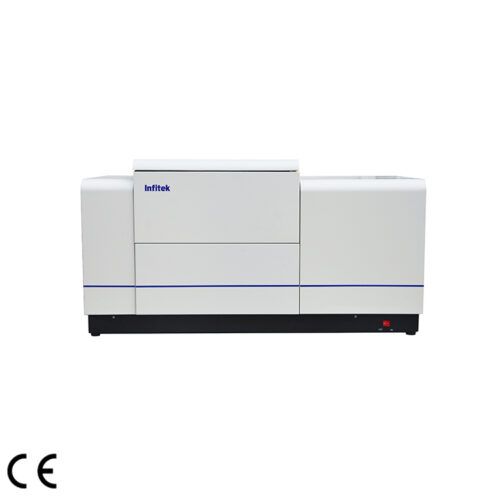
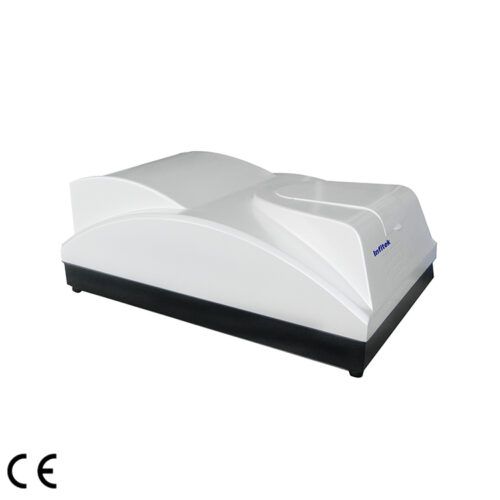
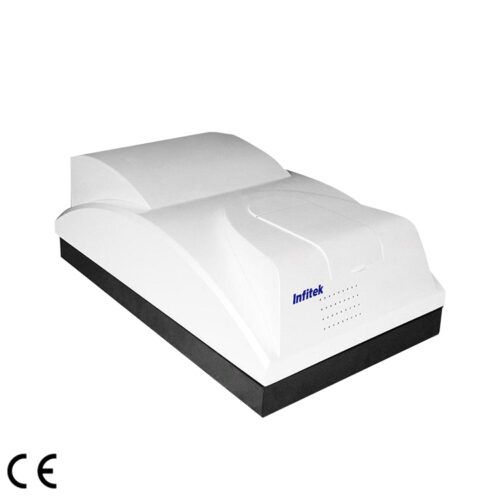
Laser Particle Size Analyzer, Professional PSA-2L2309A
Descripción
PSA-2L2309A is an intelligent fully automatic laser particle size analyzer that adopts the internationally advanced Mie Scattering and Fraunhofer Diffraction principle. As an integrated model with wet and dry dispersion systems, it features a high-sensitivity and high-resolution photoelectric probe system paired with an imported Canon lens optical path—these components ensure excellent accuracy and repeatability in particle size distribution measurements. The analyzer is widely used in quality control departments of industrial production and research institutions.
Features
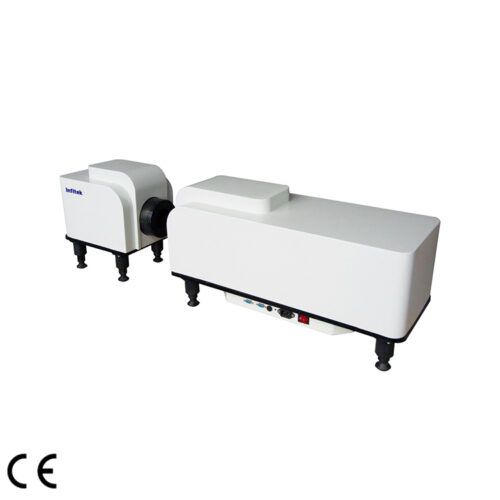
Unique Separated Modules for Wet and Dry Dispersion
The instrument employs a modular design for automatic dry and wet dispersion. Users can freely assemble the modules according to the testing requirements of sample characteristics, making the operation simple, convenient, and efficient.
Flexible Operation Modes
Both an intelligent fully automatic operation system and a manual operation mode are available for free selection. The automatic mode is extremely easy to learn and supports SOP operation, streamlining the testing workflow.
Advanced Optical Path Design
Adopting inverse Fourier (folded optical path) technology, the reception of scattered light from sample particles is not limited by the focal length of the optical path. The test angle range spans 0.015° to 145°, effectively expanding the measurement range and improving the instrument’s resolution. The sealed optical path also delivers excellent dustproof performance.
Automatic Optical Path Alignment System
Composed of precision four-phase hybrid stepper motors with a micro-stepping precision of micron level, this system maintains the optical path in an optimal state at all times, ensuring accurate and stable test results. It eliminates the need for manual optical path adjustment, reducing human intervention errors.
Automatic Sample Dispersion System
The modular design of the wet and dry dispersion systems shortens the circulation pipeline, preventing the sedimentation of large particles. This design not only facilitates uniform sample dispersion but also lowers maintenance costs and simplifies equipment cleaning and upkeep.
High-Performance Instrument Software
The proprietary unconstrained free fitting technology collects scattering data in real time during the measurement process and can automatically analyze multi-modal particle groups without being restricted by fixed functional models. Analysis results depend entirely on the distribution of the scattering spectrum, maximizing fitting accuracy and truly reflecting the particle size distribution of samples. For particles below 2 μm, the analyzer performs testing across 12 particle size grades with ultra-high physical resolution.
Software
The original unconstrained free-fitting technology collects scattering data during the measurement process. It frees particle analysis from the constraints of fixed functional models, truly reflecting the particle size distribution.
| Item | Function |
| Analysis Modes | Free Distribution, R-R Distribution, Log-Normal Distribution, Mesh Size Classification, etc., meet the diverse particle size statistical requirements of different industries. |
| Statistical Methods | Volume Distribution, Quantity Distribution |
| Statistical Comparison | It can conduct comparative analysis on multiple test results. By comparing test results of different batches of samples, samples before and after processing, and samples tested at different times, differences can be identified. This is of great practical significance for quality control of industrial raw materials. |
| User-defined Analysiss | Calculate the percentage based on particle size.
Calculate the particle size based on the percentage. Calculate the percentage based on the particle size range. These functions meet the representativeness requirements of particle testing across various industries. |
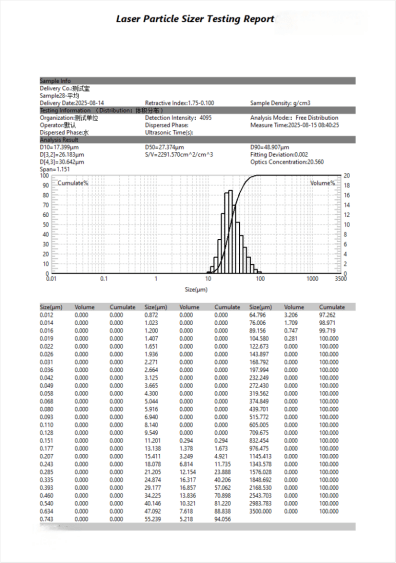
Test Report
Specification
| Model | PSA-2L2309A |
| Instrument type | Wet and Dry |
| Specification | |
| Measuring range | Wet: 0.01μm to 3500μm Dry: 0.1μm to 3000μm |
| Photodetector | Wet: 116 Dry: 116 |
| Accuracy | Wet: ≤0.5% (CRM D50) Dry: ≤1% (CRM D50) |
| Repeatability | Wet: ≤0.5% (CRM D50) Dry: ≤1% (CRM D50) |
| Design principle | Laser Diffraction |
| Analysis principle | Mie Scattering Fraunhofer Diffraction |
| Standard | ISO 13320 |
| Audit trail | Optional FDA software |
| Engineering | |
| Laser | Fiber Laser, 639nm, Max. 4mW |
| Laser safety | Class 1 |
| Detector | Log-spaced array, 0.015° to 145° |
| Operation mode | Full Automatic Manual Control |
| Optical alignment | Full Automatic |
| Test speed | Wet: ≤2min Dry: ≤1min Typical testing time: ≤10s Inverval time per test result: 500ms |
| Wet dispersion | |
| Ultrasonic | Frequency: 40kHz Power: 60W Time: adjustable |
| Stirrer | Speed: 0rpm to 3000rpm adjustable |
| Circulate | Rated Flow: 1-8L/min Rated Power: 120W |
| Sample tank | Volume: 600mL |
| Micro-sample cuvette | Optional |
| Dry dispersion | |
| Dry dispersion | Dry-turbulence dispersion patent, normal shock wave shear technique |
| Sample feeding | Automatic Sampler (SOP setting) |
| Dispersion medium | Compressed Air |
| Technical data | |
| Connect PC, LIMS | Yes |
| Test Report | Word, Excel, Image, Text, etc. |
| Working environment | Temperature: 5℃ to 35℃ Humidity: <85% |
| Storage environment | Temperature: -20℃ to 50℃ |
| Power supply | 220V, 50/60Hz |
| Product dimensions (L×W×H) | 870mm×370mm×330mm 420mm×350mm×380mm 260mm×290mm×140mm |
| Net weight | 32kg 15kg 7kg |


Get Social